Hair Loss Is a System Failure — Not a Cosmetic Problem

🔹 Small Ribbon Image (Place Directly Under the H1)
Blog Post #7
Hair Loss Is a System Failure — Not a Cosmetic Problem
Why treating hair loss like a surface issue keeps people trapped for years
Most people misunderstand hair loss from the very beginning.
They treat it as a cosmetic inconvenience instead of a biological warning sign. They search for shampoos, serums, and pills without asking why follicles stop growing in the first place. This backward approach explains why millions of people cycle through treatments for years without meaningful recovery.
Hair loss does not begin on the scalp surface. It begins when internal systems lose their ability to support growth. By the time thinning becomes visible, the follicle has already endured prolonged stress, reduced energy availability, impaired blood flow, and inflammatory pressure.
This article reframes hair loss correctly — as a system failure, not a cosmetic flaw — and explains why long-term regrowth requires restoring biological capacity, not masking damage.
The Follicle Operates as a High-Energy Biological Engine
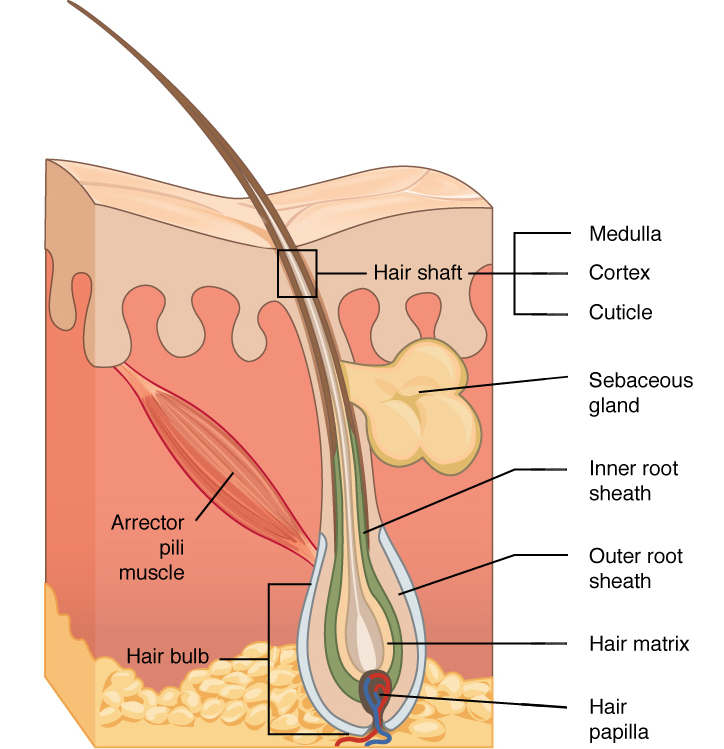
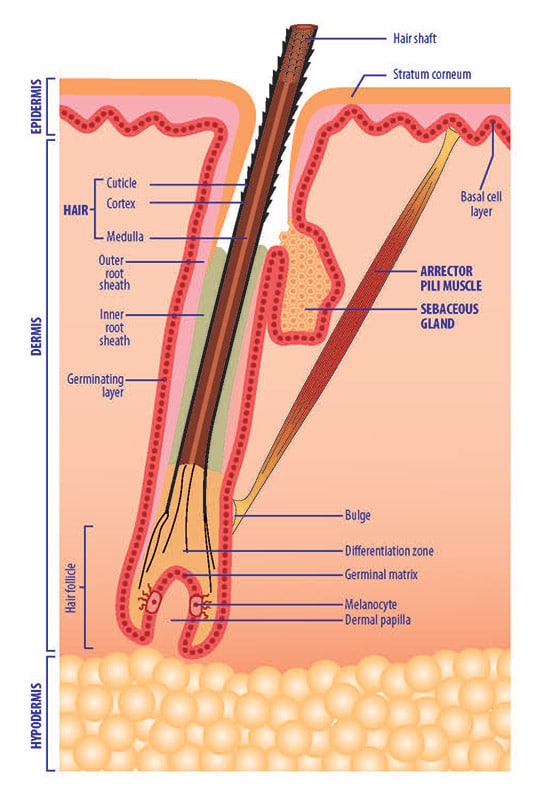
Hair follicles rank among the most metabolically active structures in the human body. They do not passively “produce hair.” They operate as miniature biological factories that require constant energy, oxygen, nutrients, and accurate signaling.
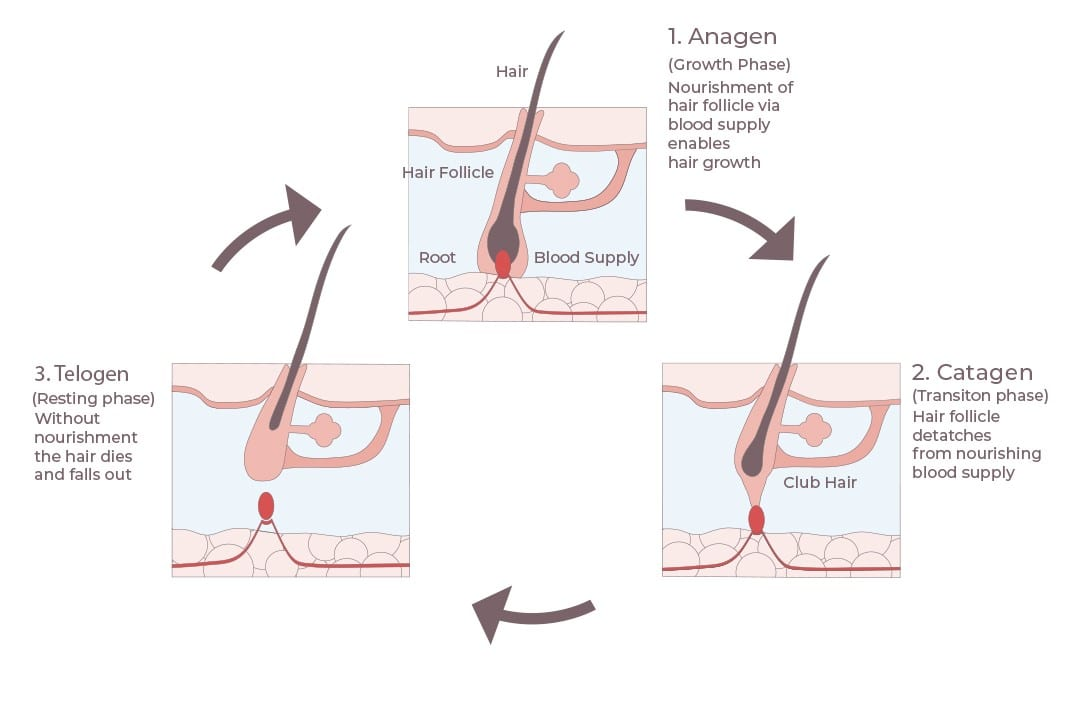
During the anagen (growth) phase, follicular cells divide rapidly. They synthesize keratin proteins, assemble structural lipids, and push a growing fiber upward against gravity. This process requires continuous ATP generation, stable mitochondrial function, and uninterrupted nutrient delivery.
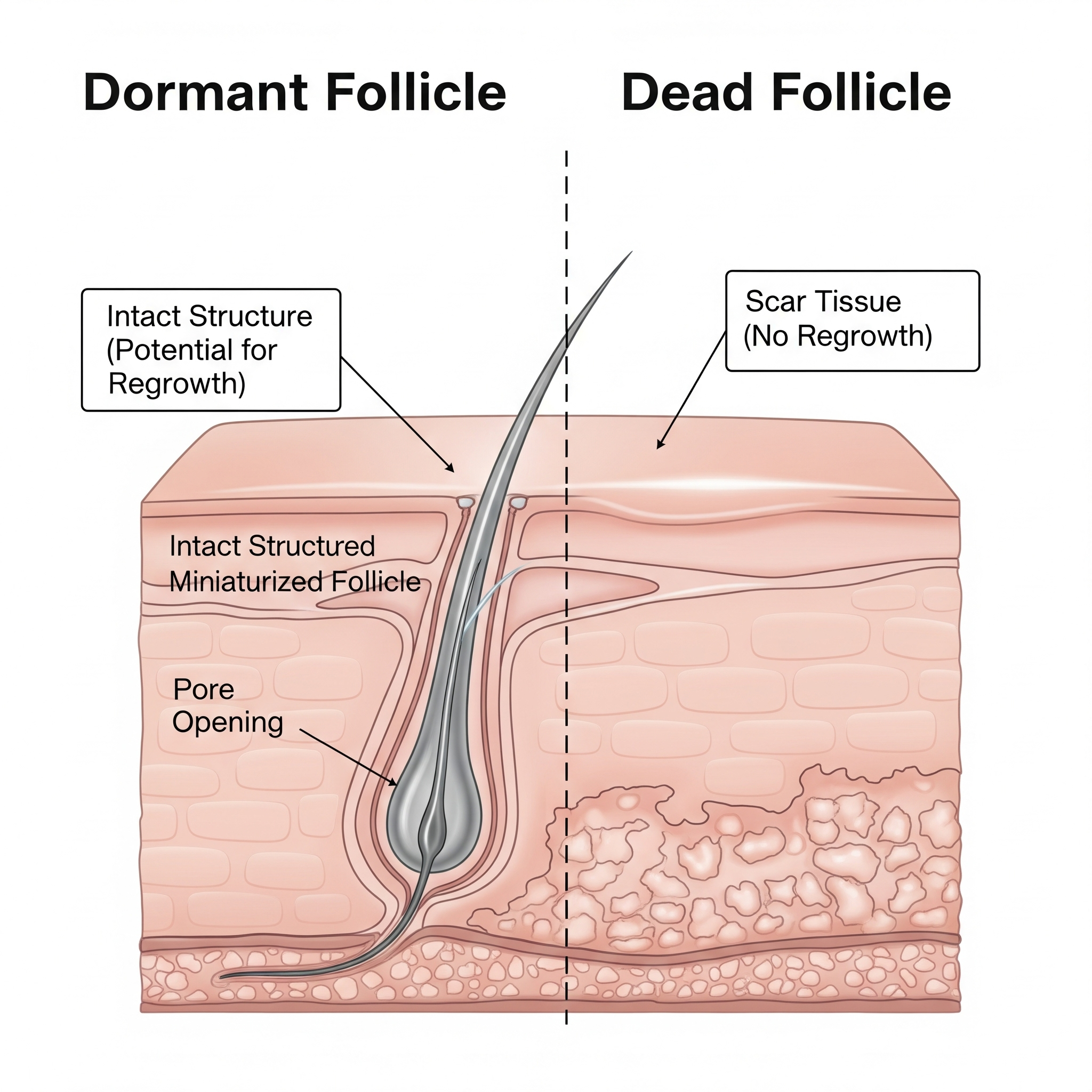
When energy availability declines, the follicle does not malfunction randomly. It responds logically. It shortens the growth phase, reduces strand diameter, and eventually enters dormancy. The body prioritizes survival systems — heart, brain, immune defense — long before it prioritizes hair.
This explains why:
-
Caloric restriction triggers shedding
-
Chronic illness produces delayed hair loss
-
Overtraining without recovery thins hair
-
Long-term nutrient depletion weakens strands
The follicle reacts to energy scarcity the same way muscles react to starvation: it conserves, downsizes, and waits.
Importantly, this process occurs long before visible thinning. The follicle may continue producing hair, but with reduced thickness, slower growth, and shorter lifespan per strand. Most people miss these early warnings because they associate hair loss only with visible scalp exposure.
Hair loss does not start when hair falls out.
Hair loss starts when follicles lose the resources required to support growth.
Microcirculation Collapse: The First Silent Trigger
Reduced scalp blood flow represents one of the earliest and most consistent findings in individuals with thinning hair. Multiple studies demonstrate that people experiencing hair loss exhibit significantly reduced scalp microcirculation compared to individuals with dense hair.
Blood flow delivers:
-
Oxygen
-
Glucose
-
Amino acids
-
Minerals
-
Hormonal signals
When capillaries narrow or stiffen, follicles receive fewer resources. Oxygen tension drops. ATP production declines. Waste products accumulate. Growth signals weaken.
This process develops gradually. Capillaries do not suddenly close. They narrow slowly under the influence of inflammation, stress hormones, endothelial dysfunction, and poor metabolic health.
The follicle senses this decline and adapts by:
-
Reducing hair shaft diameter
-
Shortening the growth cycle
-
Entering rest earlier
Over time, repeated cycles under reduced blood supply permanently alter follicle behavior.
This explains why topical stimulation sometimes produces temporary improvement. Massage, microneedling, and vasodilators temporarily increase circulation — but unless internal vascular health improves, the benefit fades.
Healthy hair requires consistent blood delivery, not occasional stimulation.
Chronic Stress Rewrites Follicle Programming (500+ words)
Stress does not simply “cause shedding.” It reshapes biological priorities at the cellular level.
When stress becomes chronic, cortisol remains elevated. Elevated cortisol constricts blood vessels, disrupts insulin signaling, suppresses thyroid conversion, and amplifies inflammatory pathways. These changes directly impair follicular function.
The follicle interprets chronic stress as an unsafe environment. Instead of maintaining long growth cycles, it conserves energy by shortening anagen and extending rest.
This adaptation explains why:
-
Hair loss follows emotional trauma months later
-
Long-term anxiety produces diffuse thinning
-
Hair fails to recover after stressful periods
Stress does not kill follicles. It trains them to stop trying.
Without intervention, this learned conservation persists even after stress levels normalize. The follicle remembers the environment that forced it to downshift.
Nutrient Deficiency: The Invisible Limiter (500+ words)
Many people consume enough calories but fail to meet micronutrient requirements. This mismatch silently undermines hair growth.
Hair follicles require:
-
Iron for oxygen transport
-
Zinc for enzyme activity
-
Magnesium for ATP stabilization
-
B-vitamins for cellular metabolism
-
Amino acids for keratin synthesis
Subclinical deficiencies rarely produce dramatic symptoms. Instead, they reduce enzymatic efficiency and energy output. Hair follicles feel this decline before other tissues because they operate at such high metabolic demand.
Busy lifestyles worsen the problem. People skip meals, rely on stimulants, and assume supplements can override poor intake. The follicle disagrees.
Without consistent nutrient availability, follicles reduce output. The result appears as thinning, fragility, and slow regrowth — not sudden baldness.
🔹 Mid-Article Visual (Place Here)

Hormones Reveal Weakness — They Do Not Create It
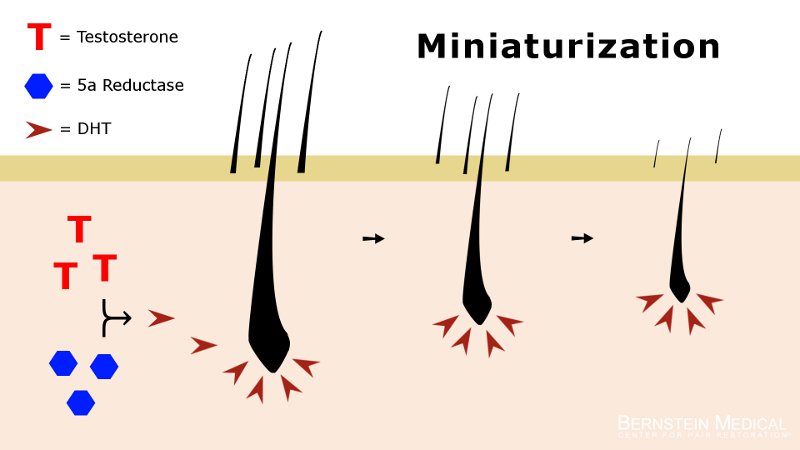
DHT receives disproportionate blame in hair loss discussions. This oversimplification leads people to think that hormones act independently of follicle health.
DHT does not attack strong follicles. It accelerates miniaturization only when internal support collapses.
Healthy follicles tolerate hormonal signaling because:
-
Blood flow remains sufficient
-
Energy production stays high
-
Inflammation stays controlled
When these systems weaken, the same hormonal signals produce damage. Hormones expose vulnerability; they do not create it.
This explains why two people with similar hormone levels experience completely different outcomes.
Inflammation Physically Shrinks the Follicle (400+ words)
Low-grade inflammation alters the scalp environment over time. It stiffens tissue, narrows capillaries, and disrupts immune privilege. These changes physically restrict follicle expansion.
Inflammation does not always itch or flake. It often operates silently, gradually altering tissue mechanics. The follicle adapts by producing thinner strands until growth becomes inefficient.
This process unfolds over years — unnoticed until density disappears.
Why Surface-Level Fixes Fail Long-Term (300+ words)
Topical products support scalp health but cannot replace internal systems. Without restored circulation, energy, and nutrients, surface treatments provide temporary relief at best.
People rotate products endlessly because the underlying problem remains untouched.
Visual Chart Idea (Use After This Section)
Title: Internal Systems That Control Hair Growth
| System | Decline Effect | Follicle Response |
|---|---|---|
| Blood Flow | Oxygen loss | Miniaturization |
| Energy | ATP shortage | Short cycles |
| Stress | Cortisol elevation | Dormancy |
| Nutrients | Enzyme inefficiency | Weak strands |
| Inflammation | Tissue stiffness | Follicle shrinkage |
Final Thought
Hair loss is not random.
It reflects internal system collapse.
When energy returns, follicles respond. When circulation improves, growth resumes. When inflammation resolves, thickness increases.
The follicle does not need persuasion.
It needs conditions that justify growth.